'Experiment'
Funded by the Arts Council of Wales, 'Experiment' was a targeted creative residency built around the concept of systemic educational engagement. I spent three intensive days at two separate secondary schools, collaborating directly with teachers, support staff, and school leadership. Rather than focusing on a traditional art class for students, the goal was to empower educators to use hands-on, tactile creativity as a cross-curricular tool to improve learning, student retention, and active participation across all academic subjects.
To navigate traditional learning barriers, I introduced low-stakes, highly textured art-making materials into the educators’ workspace. By designing creative, non-judgmental prompts, we stripped away the pressure of "perfection" and explored the raw, messy nature of creative problem-solving. This immersive practice allowed teachers to directly experience how kinaesthetic learning and artistic exploration can dismantle classroom anxiety, encourage deeper student engagement, and open up new pathways for processing complex academic subjects.


This phase of the residency focused on stripping away the rigid constraints of traditional outcomes by inviting participants into a space of pure, unstructured experimentation. By engaging directly with raw paint and fluid textures, the children were given complete permission to make a mess on paper without the pressure of structure or form. This process-led freedom lowers classroom anxiety instantly, allowing individuals to connect directly with the tactile joy of creation and unlock intuitive pathways for emotional processing.
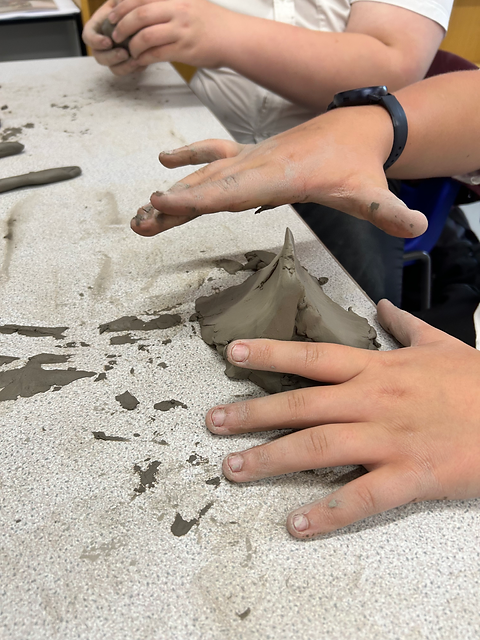
The profound impact of kinaesthetic learning became beautifully clear during our tactile clay sessions. As hands actively manipulated the raw material, one teacher remarked that they had never seen a historically disengaged student focus so intensely, identifying them in real-time as a deeply kinaesthetic learner.
This uninhibited "free space" also allowed a child the safety to make an emotional disclosure, which was immediately and seamlessly managed via the school's official reporting systems. This pivotal moment sparked an immediate, collaborative discussion with the educator regarding the vital importance of providing non-judgmental creative spaces for early emotional processing, proving that humble creative interventions leave a lasting, safe, and deeply systemic footprint on a child's educational journey.